Category: Uncategorized

  • Death toll in Gaza

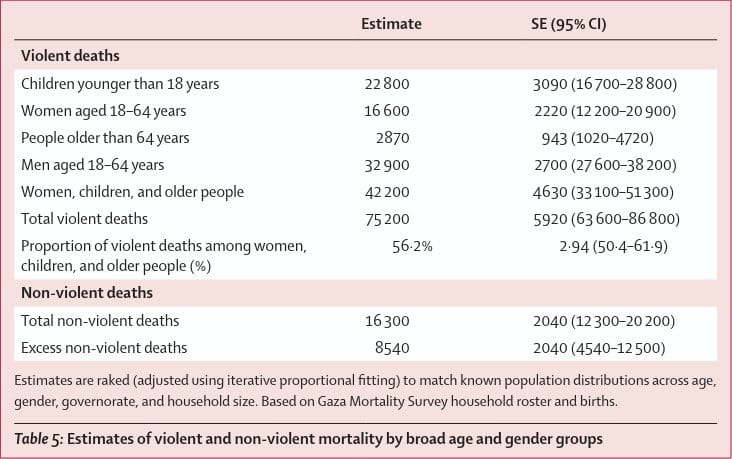
    The results of the first independent survey on the number of deaths have finally been published (Spagat et al.)! About 75.000 (±6.000) Gazans had been killed in the war as of January 2025—significantly exceeding the numbers by the Hamas Ministry of Health. Adding the death toll accounted for by the Hamas Health Ministry since January, it is rather safe to say that about 100.000 Gazans have been killed “in/because of fighting”. The statistical evaluation is based on a household survey conducted by the PCPSR on the ground in Gaza. A preprint had already been published last summer, now the paper passed peer review and editing for publication in The Lancet Global Health. Based on this preprint, already in November Gómez-Ugarte, Chen et al. provided a projection of around 100.000 violent deaths during the war in Gaza.
    After another recent IDF statement estimating that about 25.000 “terror operatives” have been killed during the war, a ratio of 3 non-combatants killed for every 1 combatant seems to be a good estimate. Usually numbers from warring parties about numbers of killed enemy combatants are to be considered as upper limits. In the case of Israel in particular we have to assume that the IDF to some degree does not only count combatants and civilians directly participating in hostilities (which, for the sake of simplicity, I also call combatants here) as “terror operatives”, but also political Hamas cadres that are not part of the chain of command and therefore civilians, Hamas propagandists, or Hamas policemen (whose status has to be debated). Furthermore, as Israel killed suspected members of the Qassam or Quds brigades in individually targeted strikes in their homes, rather than in combat, in large numbers, one also has to assume that some of these strikes were based on old intelligence and actually killed only former members of the militias (which has no more basis in IHL than the horrific claims by some Palestinians that unmobilised Israeli reservists would be legitimate targets). Furthermore, as +972 documented, several IDF officers reported and complained about a culture focussed on killed enemies as exclusive measure for success, also resulting in overreporting, also reflected by government propaganda with inflated figures and meaningless claims about “eliminated battalions”.

    However, the 83% (5 to 1) estimate for civilians among the killed by +972/Yuval Abraham, seems to be too high: It assumes that the ratio of combatants killed could be calculated by dividing the number of killed persons identified by IDF as known militia members (consequently not including civilians directly participating in hostilities or newly recruited militia members unknown to Israeli intelligence haven access to old membership lists), which would mean that Hamas was utterly failing with their attempts of hiding identities of killed fighters by censoring the Health Ministry death lists or by never reporting about those killed in underground structures. However, during some periods of the war the rate was probably actually coming close to being that bad: With about 13.000 killed reported between March and mid-August 2025, in the same period the IDF claimed to have killed only 2.100 “terror operatives” (at least 4 to 1, ranges of error to be considered), in a period when strategic operative goals of the IDF became even less clear than already at the beginning of the war.

    A ratio of 3 to 1 is devastating—it might be best compared to Russia’s destruction of Grozny 1999/2000. While the ratio might still be better than the toll of the Sri Lankan army in its 2009 final offensive to destroy the Tamil Tigers, justifying massive indiscriminate use of artillery by the LTTE’s use of human shields within alleged humanitarian zones that, however, did not guarantee separation of civilians from fighters, it is far worse than what we have seen in the fight against he Islamic State during the liberation of Raqqa, Mosul, and Falluja (some ratios around 1:1 or 1.5:1), despite the Islamic State’s ruthlessness of forcing civilians to stay with them in the city centers as human shields at gun point. 3 to 1 is not the ratio that you will expect from a modern high-tech army with thousands and thousands of tanks and modern armoured vehicles, helicopters for rapid medical evacuation, night-vision, years of focus on preparation for urban combat, and allegedly a functioning internal oversight for compliance with international humanitarian law. Given the fact that only less than 500 IDF soldiers killed and that Hamas and PIJ have been faced in battle for territory only to a very limited degree, the ratio is inexcusable with a too high risk for soldiers that would render the airstrike patterns compliant with proportionality, necessity, and precaution requirements. Rather the numbers confirm the soldiers’ report concerning the total erosion of proportionality standards for airstrikes and general discipline of ground forces (e.g. when it comes to the establishment of “free fire zones”)—amounting to a systematic crime against humanity as policy. US officer John Spencer from the Modern War Institute, whom I used to respect for all his valuable work on Urban Warfare, has to be blamed for dismissing Gaza Ministry of Health fatality numbers, while making baseless claims (not matching with his own research for example about Mosul) about extraordinary efforts by the IDF that would have led to exceptionally low civilian fatalities compared to other urban operations. The Netanyahu government has to be blamed for conscious lies about a 1:1 or 1.5:1 civilian to combatant ratio among the killed.

    According to the now published survey about 54% of those killed were women and children, which is quite consistent with the lastest Ministry of Health numbers (about 52%), within the statistical error margins. These latest Ministry of Health numbers are the result of various iterations of corrections of the death lists, adding newly identified fatalities and removing some Gazans that were still alive, but registered dead (and who in many cases complained about that!), and some natural deaths. Previous Ministry of Health as well as Hamas Government Media Office estimates (the latter were only initially used by UN bodies and later dropped), particularly during 2024, had claimed that close to 70% of fatalities were women and children. Very early on, through the work of Gabriel Epstein of the Washington Institute, it had become apparent that Hamas was underreporting, delayed in reporting and sometimes retroactively removing dead adult males from the death tolls, strongly suggesting that death lists got censored for the sake of not revealing information about killed fighters. Despite this clear evidence that among the unreported fatalities the ratio of men should be higher than among the reported, various representatives of UN humanitarian and human rights organisations—including UNHCHR Volker Türk, whose communication during the war I otherwise highly respected—presented the “close to 70% of fatalities are women and children” figure as fact and did great damage to the reputability and credibility of their organisations and raised big questions about their information evaluation mechanisms. Likewise propagandists like statistics professor Abraham Wyner (who otherwise earns money for presenting highly reputable research on global warming as forgery) have to be condemned who—whether deliberately or not—misinterpreted the irregularities of the censored death tolls (with statistical bogus arguments) to claim that fatality numbers would likely be lower. Furthermore (I am refering to the great work of Gabriel Epstein here again), contrary to some claims by defenders of the IDF and the Israeli government, there is no evidence that the Ministry of Health numbers would today still contain significant numbers of natural deaths or people that are still living. Quite unnecessary to mention that all those spin doctors have to be blamed (or pitied for their ignorance and their wishful thinking), who attributed the overrepresentation of male youth and adult men among those killed exclusively to killed combatants. It is totally what you expect from a war in an extremely patriarchal society like Gaza that male youth and adult men, while being civilians, engage in much higher risk activities. Additionally—in the context of a war where the main militias on one side exclude women—they are more often mistaken for combatants and inhibitions by soldiers to kill them despite not thinking they are combatants are probably lower.

    The study by Spagat et al. also provides estimates for excess mortality, with 8.500 excess non-violent deaths (with a huge error margin). Most of these deaths would have been avoidable as well, if a legitimate safe zone would have been established by Israel, where civilians would have been separated from combatants and properly supplied. These numbers confirm that earlier estimates (for example in a letter published in The Lancet) of total excess deaths based on multiplying the reported fatalities by numbers like 5 were baseless—or rather based on comparison with totally different cases of wars in regions with extremely undeveloped infrastructure, no sufficient systematic reporting systems, out of sight of most of the international community, and where protracted conflict led to dispersion of refugees over vast areas, and a total breakdown of already weak supply structures (think of the Second Congo War as an extreme example). However, due to the food and hunger crisis in late spring and early summer following Netanyahu’s renewed food blockade since March 2025, non-violent excess mortality rates might be significantly higher later in 2025 up until the ceasefire compared to the period studied in the survey.
  • An Israeli-Kurdish alliance in Syria?

    I have seen Kurdish and non-Kurdish activists blaming Kurdish leaders of the SDF for seeking a compromise agreement with Damascus, rather than pursuing military campaigns with the help of Israel. And I have seen quite some Israelis on social media sharing quite irresponsible, uninformed, often distorted contents about the situation of Kurds in Syria.

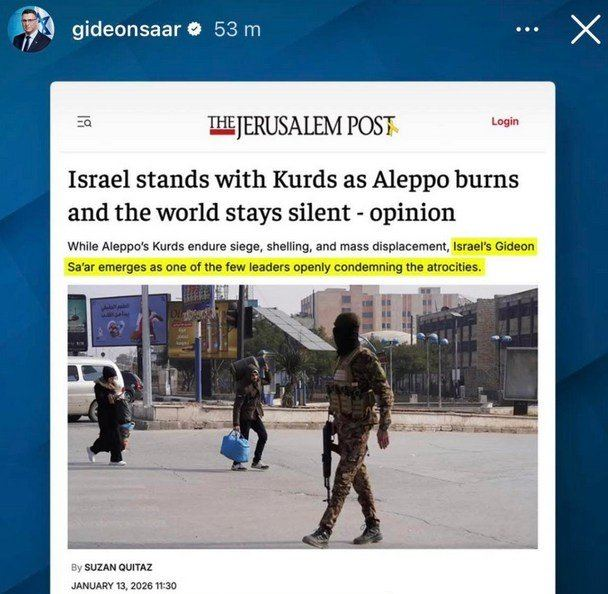
    Concerning the last year and a bit I can affirm: While many Kurds, including from the PYD and the PKK, have been quite critical of Israel (especially given the war on Gaza), there have been quite some attempts to advocate for more Israeli involvement in north-eastern Syria, including “guarantees” by the stupid Israeli Foreign Minister Gideon Saar (who, due to the corrupt and criminal nature of the entire government, somehow got the appeal of being a voice of reason) “given” to the Democratic Autonomous Administration of Northern Syria (DAANES) in a direct phone call, engagement between Israeli officials and Kurdish activists and campaigns by Kurdish Jews in Israel as well as publicity campaigns by the Israeli Foreign Ministry. Now, Saar’s “standing with the Kurds” has been proven to be worthless.

    However, to me it was rather clear that this Israeli government provided no suitable basis for a trustable alliance. The Syria policy has been driven by security paranoia, populism, by trying to appeal to Druze Likud voters any by an “if everything I have is airpower, then every problem looks like a target to be bombed” approach, but has not been based on any sound evaluations of the situation in Syria or honest engagement with Kurdish and SDF (let alone Democratic-Confederalist) political ambitions.

    The vast majority of those Israelis who fall for their government’s demagoguery has no clue that Erbil and Rojava are two different things and that the SDF included not just Kurds, but a large number of Arab militia men as well as Armenians, Yazidis, and Assyrians, the PR by foreign minister Saar largely consisted of playing some kind of Middle-East minority bingo, the inflationary use of the term “genocide” when it comes to Syria by Israeli politicians and media was simply pathetic.

    Early March last year the defense minister Katz (whose only qualification is being a Netanyahu yes man) announced that Israel will defend the Druze area of Jaramana. Apparently he did not look at a map and did not realise that this is an indefensible suburb of Damascus. There was a symbolic bombing in Damascus and of course this made nothing better for Duze in Jaramana. Those people (whether Saar himself, Kurds or Israelis) who instilled the phantasy that Israel might come to rescue in Sheikh Maqsoud (even more remote from Israel than Jaramana, and likewise indefensible) I consider to be coresponsible for the useless prolongation of fights in Sheikh Maqsoud (decision by the local council) after that had already been a withdrawal agreement, including the death of five Kurdish suicide bombers.

    In Sweida the situation is of course entirely different, because this area can be supplied by Israel and it is considered by the Israeli government to constitute strategic depth, it is about having a foot in the door in Syria.

    No matter how often Israeli politicians called the Damascus government “Jihadi terror regime in suits”, this does not change anything about the fact that at the end of the day Sharaa’s regime represents quite the type of Muslim State that the Israeli government likes: Centralised, technocratic, pro-business, Sunni authoritarianism with a revered strongman, where religion supports the strong grip on society without being conceived as a revolutionary force, just like in the Emirates and Bahrain. But only by politically opposing this model of government, and not by this mere “protecting minorities” demagoguery entertained by the Israeli government (which becomes pointless as soon as the government stops executing large scale massacres), a point could have been made for principled support of the DAANES.

    At best there were legitimate hopes that some Israeli strikes might help to buy time. But Israeli security paranoia was unable to provide an alternative view for the future of Syria—of course not, as Netanyahu just like the Trump government was not in principle opposed to the type of new government in Damascus (in the case of the US, however, at least the military establishment’s long-standing direct connections with the SDF are still a basis for some support). Buying some time might give some leverage, but only if you have some viable vision for the future of Syria, in no way it could have made agreements with Damascus superfluous.

    The current demise of the DAANES is a tragedy—unfortunately irresponsible “pro-Israel” advocacy and false promises from Israeli leaders have also played a role in it.

  • Zionismus und Antizionismus

    Hin und wieder werde ich befragt, ob ich Zionist oder Antizionist bin, oder beschuldigt, Zionist (und damit Rassist) oder Antizionist (und damit Antisemit) zu sein. Doch wie verstehe ich meine eigene Situation?

    Die Antwort als Formel: Allem voran bin ich (sozialistischer) Antinationalist und damit sicherlich kein Zionist, aber auch nicht im Besonderen ein Antizionist. Was bedeutet das konkret?

    Zunächst einmal muss ich vorwegschicken, dass ich es für den gesamten Diskurs rund um den Nahostkonflikt für extrem schädlich halte, welche übertriebene Bedeutung einem als Zionismus betitelten ideologischen Phänomen zugewiesen wird. Sicherlich kommt gerade die Diskussion innerhalb Israels wie auch in der jüdischen Diaspora nicht um das ideologische Erbe des Zionismus herum. Doch Fragen der Friedenspolitik, des internationalen Rechts, der Menschenrechte und einer demokratischen, fortschrittlichen Zukunft in Israel und Palästina lassen sich in sehr vielen Aspekten auch erst einmal in allgemeinen Begriffen ohne besondere Rücksicht auf die Besonderheiten der israelischen Gründungsideologie diskutieren. In weiten Teilen sich als antizionistisch verstehender Solidaritätsbewegungen gegen die Besatzung Palästinas grassiert leider ein unmaterialistisches, idealistisches Geschichtsverständnis, welches den Nahost-Konflikt auf ideologische Eigenheiten „des“ Zionismus zurückzuführen sucht. Auch Verteidiger „des“ Zionismus tun ihren Anliegen oft keinen Gefallen, wenn sie Fragen der Sicherheitsinteressen und der politischen Selbstbestimmung von (nicht nur) jüdischen Israelis von Diskussionen abhängig machen, inwiefern nun der Zionismus vor 1948 eine gute Idee war und inwiefern er recht hatte.

    Ferner sehe ich mich als Nicht-Jude und Nicht-Israeli auch nicht unter einem starken Entscheidungsdruck, mich ideologisch in Bezug auf den Zionismus zu identifizieren. So wenig ich Anhänger des Peronismus, des Kemalismus, des Schwarzen Nationalismus, des Pan-Turanismus, des Nasserismus, des Pan-Arabismus oder des jüdischen Territorialismus bin (teilweise ebenso heterogene und widersprüchliche Nationalbewegungen wie der Zionismus), so wenig verstehe ich mich als Anti-Peronisten, Anti-Kemalisten, Anti-Black-Nationalist, Anti-Turanisten oder Anti-Pan-Arabisten. Keine dieser Bewegungen oder Ideologien ist mir wichtig genug, um von ihrer Negation aus meine allgemeine ideologische Position zu bestimmen – dasselbe gilt für den Zionismus.

    Diverse separatistische Bewegungen in aller Welt beäuge ich skeptisch – nicht aber weil ich das Nationalbewusstsein dieser oder jenen spezifischen diskriminierten oder gar unterdrückten und verfolgten Gruppe eine ganz spezifisch zu kritisierende ideologische Verirrung halte, sondern schlichtweg weil der Kampf für einen weiteren dysfunktionalen Nationalstaat in der jeweiligen politischen Wirklichkeit sehr wahrscheinlich bloß zu noch mehr Leid führen würde. Maos Dichotomie zwischen gutem Patriotismus der Unterdrückten und schlechtem Patriotismus in den Unterdrückernationen ist nicht haltbar – wie so viele Nationalismen ist auch der Zionismus weder als gerechter minoritärer Nationalismus zu feiern, noch auf seine Geschichte der Unterdrückung der arabisch-palästinensischen Bevölkerung zu reduzieren. Erstaunlich ist in Bezug auf den Zionismus lediglich, wie selbstverständlich es auch für viele Linke auf der Welt ist, die Opposition gegen diesen einen Nationalismus zum Kernbestand ihrer intersektionalen Matrix hinzuzuzählen.

    Ein weiterer Vorbehalt ist bei der Frage der Positionierung zum Zionismus zu berücksichtigen: Die Frage hat im Laufe der Geschichte ihre Bedeutung verändert. Vor 1948 stellte sich die Frage, ob ein jüdischer Staat bzw. eine jüdische nationale Heimstätte, vorrangig in Palästina, errichtet werden soll, dieses Aufbauprojekt unterstützt werden soll – ja oder nein. Mit der Staatsgründung verschiebt sich die Fragestellung grundsätzlich: Denen, die gegen Israels Fortbestand als jüdischer Staat kämpfen, stehen nicht allein die Unterstützer dieses Projekts gegenüber, sondern auch all jene, die die Existenz des jüdischen Staates schlichtweg als neue Gegebenheit akzeptieren – als ein auf einem Berg von Gewalt und historischem Unrecht gebauter Nationalstaat unter vielen – und dies als Alngelegenheit seiner Bevölkerung begreifen.

    Einige radikale Antizionisten sehen auch jedwede Unterstützer einer Zweistaatenlösung als Zionisten an – spiegelbildlich dazu versuchen einige Verteidiger Israels ein Bekenntnis zum Zionismus zu normalisieren, etwa indem sie sagen, Zionismus heute bedeute doch nur, Israels Existenzrecht anzuerkennen. Doch beides ist zu kurz gegriffen. So sind die israelischen Kommunisten der Maki – eine mehrheitlich arabische Partei –, die die Formal der zwei Staaten für zwei Völker – mit vollen nationalen Rechten auch für die arabischen Bürger Israels – unterstützen, doch sicherlich keine Zionisten. Etwas mehr ideologische Identifikation braucht es dann doch, um zum Zionisten zu werden.

    Und hiermit möchte ich nun aufhören, mich der Frage bloß zu entziehen und erklären, warum ich meine Position auch in der Sache weder als (pro-)zionistisch noch antizionistisch begreife: Weite Teile des Zionismus waren teils von Anfang, teils von früh an geprägt von einem bunten Amalgam von Nationalromantik, religiösem revivalism, biblisch begründeten Territorialansprüchen, Exzeptionalismus, Ignoranz und Naivität, was die multiethnische Realität in der Levante angeht, Rassismus, kolonialer Unterdrückung, exklusivem Ethnonationalismus, Terror. Nicht alle diese Aspekte waren und sind in allen Phasen und in allen Strömungen präsent bzw. im selben Grad ausgeprägt. All diese mit meinem allgemeinen nationalismuskritischen politischen Weltbild inkompatiblen Aspekte sind jedoch dennoch für weite Teile des Zionismus zu bedeutend gewesen, als dass ich es mit historischer Redlichkeit vereinbaren könnte, sie zur Nebensächlichkeit zu erklären. Es ist eine idealistische Verdrehung, den Zionismus als reale Bewegung von einer vermeintlich umstandslos korrekten Kerneinsicht und einer vermeintlich umstandslos progressiven Kernidee her zu definieren und mich deshalb irgendwie ideologisch mit ihm zu identifizieren. Insbesondere finden sich all die genannten Aspekte auch innerhalb des Mainstream des Labor-Zionismus und im liberalen Zionismus und sind keine Alleinstellungsmerkmale von Revisionisten oder rechtsreligiösen Zionisten. Insbesondere war die zionistische Bewegung in einer kritischen Phase – nämlich ab 1920 bis zum Palästinakrieg und zur Staatsgründung 1947/48 – ganz entscheidend darauf angewiesen, dass die britische Kolonialmacht demokratische Wahlen in Palästina und eine Unabhängigkeit verhinderte, solange es keine jüdische Mehrheitsbevölkerung gäbe. Lediglich eine Minderheit von Binationalisten etwa des Brit Schalom und von haSchomer haTzair – wie auch die nichtzionistischen Kommunisten – stand diesem Bund mit der kolonialen Unterdrückung entgegen. Die strategisch eingesetzten Terrorkampagnen islamistischer und arabischnationalistischer Hardliner wie dem Antisemiten Husseini insbesondere 1929 und 1936ff., die mitunter eine Remigration aller seit dem Ende der osmanischen Herrschaft eingewanderter Juden forderten, ließ das Bündnis mit den kolonialen Unterdrückern für viele Juden in Palästina für die eigene Sicherheit alternativlos erscheinen. Denjenigen, die versuchen unter Rückgriff auf Strömungen und Ideen, die sich nie haben durchsetzen können, den Zionismus zu „retten“, wünsche ich viel Erfolg – ehe sie mit diesen Projekten hegemonial werden, werde ich persönlich jedoch nicht zum Zionisten.

    Insbesondere bin ich selbstverständlich auch kein Zionist in dem besonders engen Sinne, dass ich nationalbewusste Juden, die sich für die Auswanderung nach Eretz Israel entscheiden, vor 1948 Verantwortung in der zionistischen Aufbauarbeit übernahmen, seit 1948 patriotisch für ihr Land stehen, allein deshalb schon einen besonderen sittlichen Vorzug zuschreiben würde.

    Dem gegenüber müssen jedoch die Erfolge der zionistischen Bewegung in verschiedenen historischen Situationen anerkannt werden – gerade im Hinblick auf das Scheitern anderer Bewegungen (einschließlich sozialistischer Bewegungen) gegenüber dem Antisemitismus in Europa wie auch der islamischen Welt. In den 1930ern, während nach und nach andere Auswanderungsziele wie die USA und Argentinien ihre Grenzen schlossen, gelang es noch etwa 250.000 Juden nach Palästina zu entkommen (bis die Briten zur Befriedung des arabischen Aufstands 1939 noch vor dem deutschen Überfall auf Polen die Einwanderung stoppten). Möglich war dies, weil die Zionisten das Recht auf Einwanderung mit Hilfe der Briten durchsetzten und die Einwanderung organisierten. Für viele ware Palästina die einzig mögliche Zuflucht aus Europa, wo sie andernfalls in die Hände der deutschen Vernichtungsmaschinerie geraten wären. Gleichzeitig war der Zionismus auch eine kulturelle Modernisierungsbewegung, mit entsprechenden bürgerlichen und sozialen Errungenschaften, liberalen und in Teilen der Bewegung – etwa in den Kibbutzim – sozialistischen Werten. Selbst der ursprüngliche revisionistische Zionismus war in seinem Staats- und Gesellschaftsverständnis (nach innen) liberal – trotz der Annäherung ans faschistische Italien.

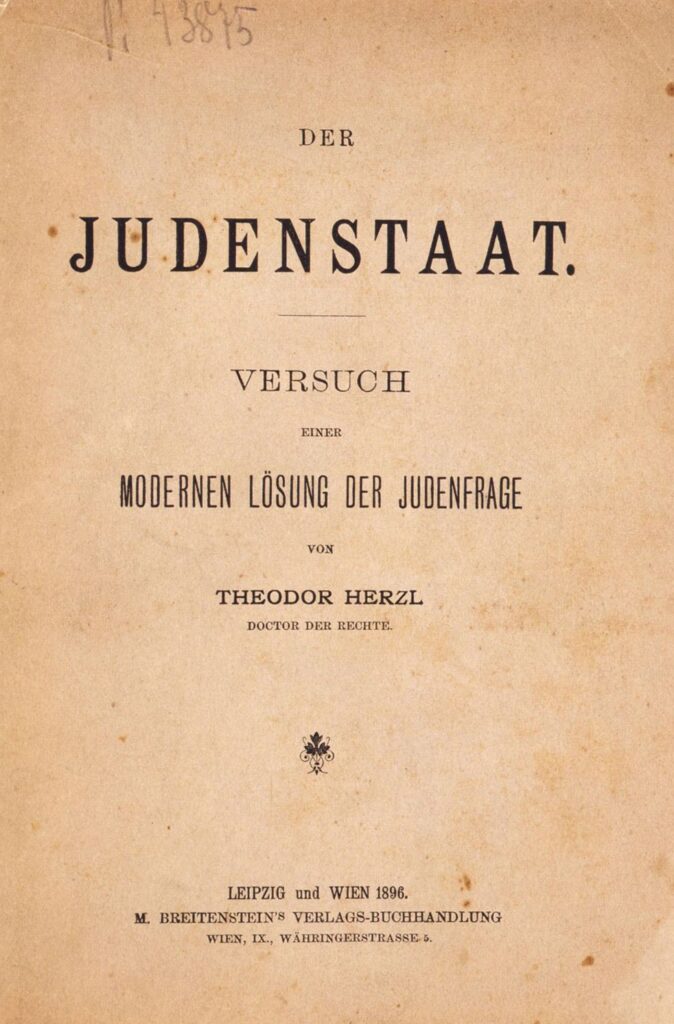
    Hatte der Zionismus recht? Bietet einzig und allein ein eigener jüdischer Staat Sicherheit vor den schlimmsten Formen der Verfolgung und Vernichtung? Jedenfalls hatte Herzl wohl recht mit seiner zentralen Einsicht, dass angesichts des modernen Antisemitismus die Assimilation im Allgemeinen keinen Ausweg bot. Warnungen von Zionisten, dass der Judenmord nach den Pogromen von 1903, 1905 oder im Russischen Bürgerkrieg noch kein Ende genommen hatte, erwiesen sich als berechtigt. Wenn wir die Bewegung an ihrem Erfolg messen, müssen wir aber auch feststellen, dass deutlich mehr europäische Juden sich in den Jahren vor 1939 in die USA retten konnten als nach Palästina. Auch die Zahl derjenigen, die im Zweiten Weltkrieg aus besetzten Gebieten in die Tiefen der Sowjetunion (die in den 1930ern bereits jüdische kulturelle Autonomie zurücknahm und nach dem Krieg zu antisemitischen Kampagnen überging) haben fliehen können, überstieg bei Weitem die Zahl derjenigen, die sich nach Palästina retteten. Von irgendwie entfernt realistischen Bedingungen ausgehend war die zionistische Bewegung weit davon entfernt, dass sie einem Großteil der künftigen Opfer der Shoa eine Zuflucht hätten bieten können. Alternative Geschichten, in denen der Zionismus Millionen Juden gerettet hätte, sind weit von dem entfernt, was die Bewegung mit ihrem langsamen Aufbauprojekt in Palästina angesichts der dortigen ökonomischen Verhältnisse und politischen Kräfteverhältnisse und der auch nur teilweisen Unterstützung seitens der jüdischen Diaspora real zu leisten fähig war. Dass für so viele Juden der Zionismus die letzte Zuflucht bot, war zu einem guten Teil auch weniger zionistischer Weitsicht, sondern historischer Kontingenz geschuldet – die Türkei blieb im Zweiten Weltkrieg neutral, die Sowjetunion band deutsche Truppen im Osten, während das British Empire Malta halten und Deutsche und Italiener bei El Alamein besiegen konnte, sodass Palästina vor einer deutschen Invasion verschont blieb. Umgekehrt kostete womöglich allein Stalins Ignoranz gegenüber den Warnungen Harro Schulze-Boysens und Richard Sorges vor Hitlers Angriffsplänen hunderttausenden Juden das Leben. Dennoch sind der zionistischen Bewegung ihre Erfolge hoch anzurechnen – ebenso wie die historischen und heutigen Verbrechen der zionistischen Bewegung bzw. des Staates Israels, bis hin zu den Verbrechen gegen die Menschheit im Gaza-Krieg, ihnen anzulasten sind.

    Die zionistische Bewegung hätte in der Verteidigung gegen den Antisemitismus manches besser machen können und der Schutz von Juden vor antisemitischer Verfolgung war auch nicht immer ihre höchste Priorität – im Guten wie im Schlechten war und ist das Streben nach nationaler Stärke in Eretz Israel nicht auf ein Mittel zum Zweck der Selbstverteidigung zu reduzieren, zuweilen steht es mit dem Schutz vor Antisemitismus auch in Konflikt (wie z.B. an Ben Gurions Politik angesichts der Nazis in verschiedenen Fragen deutlich wird). Der Widerspruch wird besonders schwer aufzulösen in Hinblick auf die arabische und islamische Welt. Zum Einen lassen der Import des europäischen Antisemitismus in die arabische Welt vor allem seit Ende des 19. Jahrhunderts und die Geschichte des arabischen Nationalismus und des Islamismus mit Verfolgung und an einigen Orten zu einigen Zeiten massenhafter Ermordung anderer ethnischer und religiöser Minderheiten – seien es Kurden, nicht-arabische Schwarze im Sudan, Jesiden im Iraq, Bahai im Iran oder Kopten in Ägypten – es äußerst zweifelhaft erscheinen, dass Juden in der islamischen Welt ohne den Zionismus heute ein besseres Leben hätten oder auch nur sicherer wären, als sie es heute in Israel sind. Dass ausgerechnet der Antisemitismus und der Hass auf Israel einen derartig zentralen Stellenwert in Islamismus und arabischem Nationalismus erhalten hat und wie sich antijüdische Kampagnen kurz vor und nach der israelischen Staatsgründung in vielen arabischen Ländern zugespitzt haben, ist tatsächlich unauflösbar verflochten mit den ganz spezifischen außergewöhnlichen Umständen der israelischen Staatsgründung und der zionistischen und dann israelischen Bündnispolitik. Letztlich haben sich nicht bloß assimilationistische, liberale, sozialistische und orthodox-religiöse Hoffnungen, wie der Antisemitismus überwünden werden könnte, sondern auch so manche diesbezügliche zionistischen Vorstellungen schwerwiegend getäuscht.

    Nur als Fußnote möchte ich anmerken, dass ich auch mit dem von einigen israelischen linken Intellektuellen verwendeten Label des Postzionismus – das für die Idee steht, dass der Zionismus seine historische Aufgabe erfüllt hat und die israelische Politik sich von dieser Leitidee verabschieden sollte – nur bedingt etwas anfangen kann. Das zionistische Erbe ist – im Guten wie im Schlechten, im Vermeidbaren wie im Notwendigen – sehr lebendig. Ich denke, die Zeit für einen Postzionismus als überzeugender, vielversprechender politischer Agenda kann realistischerweise allenfalls kommen, nachdem mit Unterstützung eines breiten Bündnisses auch ganz maßgeblich von verschiedenen zionistischen Strömungen ein Frieden mit Palästina und ein Ende der Besatzung erreicht sind.

    Für Friedensperspektiven abträglich sind idealistische Theorien, die in einem – heute meist Siedlerkolonialismus genannten – spezifischen ideologischen Gehalt „des“ Zionismus eine Art Ursünde des Staates Israels sehen, die notwendig zu immer weiterer Landnahme, Siedlergewalt, immer neuer ethnischer Säuberung und bis zum Völkermord führen muss. Ein Blick, der mit einem realistischen Blick auf die wechselhafte, von jeweiligen inneren und äußeren Kräfteverhältnissen bestimmte Geschichte Israels – die etwa auch die Rückgabe des Sinais an Ägypten und den wie auch immer mangelhaften Oslo-Prozess beinhaltet – nicht vereinbar ist. Ich möchte dafür plädieren, auf der einen Seite den Konflikt zu entexzeptionalisieren. Politische Lösungen aufbauend auf Anerkennung nationaler wie individueller Rechte von Juden wie aus Arabern in Israel bzw. Palästina sind auf Grundlage allgemeiner Prinzipien gepaart mit Pragmatismus zu suchen – nicht in der Identifikation mit oder Opposition zu „dem“ Zionismus (ein Nationalismus von vielen) als vermeintlich ganz singulärer Ideologie. Zugleich muss der Antisemitismus als eine ideologische Deformation, als Ressentiment analysiert und ernstgenommen als in seiner Bedeutung über den Nahostkonflikt (ja, in einem weiten Begriff auch über den Bezug auf Juden) weit hinausgehend. Die zionistischen Antworten auf den Antisemitismus müssen – so partiell sie auch sind – ernstgenommen und geprüft werden, ohne jedoch „den“ Zionismus zu einer – gar einzig richtigen und hinreichenden – bloßen Antwort auf den Antisemitismus, zu einer Negation des Antisemitismus zu idealisieren. Richtige und wichtige Kritik am Zionismus als Bewegung und Ideologie gibt es viel – bestenfalls ist sie gegründet in einem Verständnis der internationalen und interimperialistischen Konkurrenz im Zeitalter des Kapitalismus, der konkreten regionalen wie auch jüdischen Geschichte und des Nationalismus als Ideologie. Während antisemitischer Zionismus schon mindestens seit Rosenberg altbekannt ist, tut eine Kritik Weltanschauungen, die den Antizionismus in ihren Mittelpunkt aufnehmen, wie auch an anderen Formen ideologisch verzerrter, insbesondere idealistischer antzionistischer Betrachtungen des Nahost-Konflikts auch ganz jenseits des Antisemitismusvorwurfs Not.

  • Declaring people terrorists

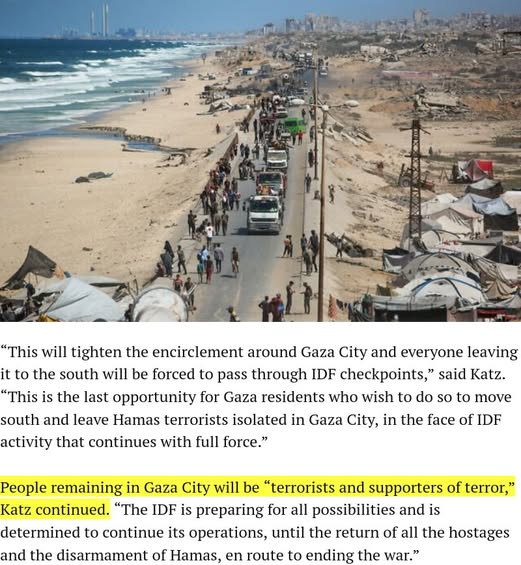
    Israeli Defense Minister and Netanyahu yes-man Israel Katz is once again announcing war crimes and openly expressing his contempt for international humanitarian law. Just refusing to evacuate from a place does not make you a “terrorist” or “supporter of terror”. No, forced evacuations for safety reasons are not in themselves illegal (they can be quite a good thing). Yes, forcing civilians to stay, as Hamas sometimes tried, is a severe war crime. No, based on the information I have, I would not recommend anyone to ignore the evacuation order (especially not just out of despair or for reasons like “sumud”). But no, al-Mawasi is not a legitimate safe-zone and it is overcrowded and insufficiently supplied (given the fact that nearly two years have passed since the initial declaration of this alleged “humanitarian” zone). But yes, especially right now it will be much safer for most people. And no, not everyone will be physically able to leave.

    Lets hope the truce will be reached within a few days and it will all be no longer relevant. Dozens more will be killed the next days for nothing, it should just stop (however, we should keep in mind that historically speaking an intensification of fights right before a truce to strengthen one’s own position is not that unusual, as silly as it sounds; this should also be considered regarding Hamas’ indiscriminate rocket attacks on the city of Ashdod today during Yom Kippur). But what if Hamas rejects or Netanyahu takes some minute additional Hamas demand as excuse to withdraw from the deal …

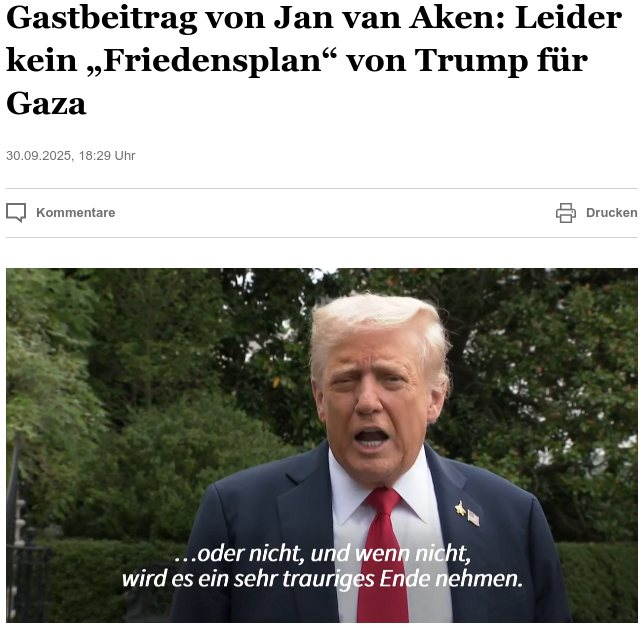
  • „Trumps Friedensplan“. Eine Antwort an Jan Aken

    Lieber Genosse Jan Aken,

    mit einer gewissen Irritation habe ich Deinen Gastbeitrag zum sogenannten „Friedensplan“ von Trump für Gaza gelesen. Der Beitrag wirft für mich einige Fragen auf, wie wir als Partei unsere außenpolitische Perspektive schärfen können und was das Eintreten für Rechte der Palästinenser wie der Israelis gerade aufbauend auf unserer Friedensperspektive bedeuten soll.


    Gerade für die Klarheit unserer friedenspolitischen Perspektive ist es entscheidend, dass wir nicht nur, wie Du richtig sagst, „Ideen und Plänen mit Offenheit begegnen, wenn auch nur die winzigste Chance besteht, dass sie uns einen Schritt in Richtung Frieden bringen“, sondern eben auch klar zu benennen, welche – womöglich bescheidenen – Chancen man sieht, wie diese Chancen auch in Kauf zu nehmende Ungerechtigkeiten aufwiegen, und die Skepsis darüber, ob ein Plan gelingen kann, nicht mit moralischer Empörung über den Plan zu vermischen.

    Vielleicht sollten wir mit einem Missverständnis beginnen: Selbstverständlich handelt es sich trotz des Trump-typischen großen Namens nicht um einen Plan zur Beilegung des israelisch-palästinensischen Konflikts und für einen endgültigen Frieden. Es geht um ein Ende des 2023 begonnenen Krieges in Gaza zwischen der Hamas (unterstützt von Hizbullah und Ansar Allah) auf der einen und Israel auf der anderen Seite. Es geht erst einmal um einen unbefristeten Waffenstillstand (truce). Es geht nicht darum, jetzt einen dauerhaften Frieden zu verhandeln – palästinensischer Staat, Tempelberg/Al Aqsa, Jerusalem, Grenzen, Flüchtlinge, Minderheitenrechte, jüdischer Staat. Sehr viel bleibt ungelöst – so wird beispielsweise auch von der Hamas, die nach wie vor mit pseudoreligiöser Begründung einen dauerhaften Frieden mit Israel ablehnt, keine Anerkennung der Staatlichkeit Israels gefordert. Anders als die von Frankreich und Saudi Arabien initiierte, von EU und Arabischer Liga unterstütze New Yorker Erklärung von letztem Juli oder die alte Genfer Initiative von 2003, ist dieser sogenannte Trump-Plan auch kein Plan für die Parameter eines umfassenden Friedensprozesses. Er enthält allerdings einige Grundsteine für die Zukunft in Gaza nach dem Krieg, die auch Konsequenzen für ganz Palästina haben werden. Wir müssen den Plan daran messen, wie vielversprechend er ist, um den Krieg, das Gemetzel, die Verbrechen gegen die Menschheit, die humanitäre Katastrophe zu stoppen, und dann auch sekundär an der Perspektive, die sich mittelfristig für Gaza und Palästina jetzt mit Chancen und Risiken öffnet. Wir sollten den Plan nicht messen an etwas, was er nicht ist und derzeit auch gar nicht sein kann.

    Erst einmal zur Frage, ob der Plan den Krieg beenden kann: Erst einmal müssen wir anerkennen, was für einen Wandel der Situation wir im Vergleich zu vor 7 Monaten jetzt gesehen haben. Im Februar gab Trump mit seinem Riviera-Plan Rückendeckung für all jene israelischen Politiker, die die Lösung des Konflikts in Vertreibung, in ethnischer Säuberung sehen. Witkoff lieferte Netanjahu den Vorwand, über Verlängerung des Waffenstillstands nicht weiter zu verhandeln. Trump ließ Netanjahu freie Hand bei der Blockade Gazas, die in der Hungerkatastrophe im Juli gipfelte. Waffenbeschränkungen wurden aufgehoben. Jetzt hat Trump eine Kehrtwende hingelegt und ausgerechnet Netanjahu dazu gezwungen, einem Plan, der von einem zukünftigen palästinensischen Staat spricht, zuzustimmen. Dies ist ein Erfolg des Drucks des Golfkooperationsrats (Ölpreise?), dessen Vertreter sich letzte Woche mit Trump trafen und bereits Netanjahus Entschuldigung für den Luftschlag in Qatar erwirkten.

    Was nun die unmittelbaren Erfolgsaussichten angeht: Trump – bzw. Tony Blair – hat hier einen Kompromiss formuliert in Bezug auf den entscheidenden Punkt, der bisher ein Ende des Kriegs verhindert hat. Die israelische Regierung hat stets eine Entwaffnung der Hamas gefordert. Die Hamas hat zwar angeboten, eine alternative Regierung in Gaza zu akzeptieren, aber eine Entwaffnung abgelehnt. Das jetzige Abkommen sieht die Demilitarisierung Gazas vor, ohne dass jedoch die Umsetzung daran geknüpft wird, dass die Hamas zunächst ihre Waffen bereits abgegeben, die Tunnel bereits geräumt haben muss. Ein Hoffnungsschimmer.

    Nun zu dem diesbezüglich entscheidenden Bedenken in Deinem Artikel:

    „Netanjahu hat schon klargemacht, wie er seinen Part auslegt: Die Geiseln kommen frei, aber die IDF bleibt in Gaza. Wer glaubt ernsthaft, dass die Hamas da mitmacht?“

    Netanjahu hat mit Trump nachverhandelt, dass die IDF sich nur schrittweise aus Gaza zurückzieht. Sie zieht sich zunächst aus dem Küstenstreifen zurück, in dem die meisten Palästinenser leben. Dann kommen die Geiseln frei. Der Abzug aus dem Rest von Gaza – von einem schmalen Grenzstreifen abgesehen – erfolgt erst, nach dem die internationalen Sicherheitskräfte in Gaza die Arbeit aufgenommen haben. Das sind die Bedingungen. Es ist sehr zu hoffen, dass Netanjahu keinen Rückzieher macht und bei diesen Bedingungen kann auch noch nachverhandelt werden. Dass die IDF in Gaza bleibt, ist jedoch nicht der Plan.

    Nun zu Deiner grundlegenderen Skepsis:

    „Die größte Schwachstelle: Palästinenser:innen waren daran überhaupt nicht beteiligt.“

    Dies ist so nicht richtig. Erst einmal ist der Plan ein Vermittlungsvorschlag, Ergebnis von fast zwei Jahren Verhandlungen zwischen Israel und der Hamas. Die zentrale Forderung einer palästinensischen Technokratenregierung geht auf die Abkommen zwischen Hamas (!) und Fatah in Peking im Juli 2024 sowie in Kairo im Dezember 2024 zurück. Im Anschluss an die New Yorker Erklärung soll eine „reformierte“ Palästinensische Autonomiebehörde nach einer Übergangsphase die Regierungsgewalt in Gaza übernehmen. Wie diese Reform gelingen soll, bleibt derzeit fraglich – dennoch ist es ein großer Schritt, dass Netanjahu eine solche Übergabe nun öffentlich unterstützt.

    Das Mandat für internationale Sicherheitskräfte in Gaza ist auch keineswegs auf dem Mist von Tony Blair erst gewachsen, der gern Kolonialbeamter in Gaza wäre. Es geht zurück auf den ägyptischen, von der Arabischen Liga unterstützten Vorschlag vom März 2025 für den Wiederaufbau von Gaza – dem Gegenvorschlag zu Trumps Riviera-Plan. Da Netanjahu damals meinte, von Trump einen Freifahrtschein zu haben, hat er den Vorschlag geflissentlich ignoriert – leider hat er auch in der israelischen Gesellschaft wie auch unter Linken und Friedensaktivist_innen international viel zu wenig Aufmerksamkeit erhalten.

    „Dabei ist sich die Friedensforschung einig darin, dass Friedensverhandlungen nur funktionieren, wenn alle Beteiligten mit am Tisch sitzen.“

    Bei diesem Satz handelt es sich leider um einen Gemeinplatz. Wir erinnern uns an den Friedensprozess in Nordirland, wo aufgrund der Befindlichkeiten von Unionisten Sinn Féin nicht mit am Verhandlungstisch sitzen durfte und deshalb ihre Positionen indirekt miteingebracht werden mussten. Der Prozess war bekanntermaßen trotzdem erfolgreich.

    „Jetzt ein ‚Friss-oder-stirb‘-Angebot vorzulegen, ist das Gegenteil von erfolgreichen Friedensprozessen.“

    Hier benennst Du in der Tat ein großes Problem der Verhandlungsformate seit Camp David II: Begünstigt durch die „Friss-oder-stirb“-Angebote gegenüber palästinensischen Führern, die sich auch der Unterstützung ihrer Bevölkerung nicht sicher waren, wurden Chancen auf Frieden verpasst. Der palästinensischen Gesellschaft wurde keine Chance gelassen, über stehende israelische Angebote selbst zu debattieren. Israelische Friedensangebote werden in einem Großteil der palästinensischen Gesellschaft daher als bloße Täuschungsmanöver angesehen – unter diesen Bedingungen entwickeln sich keine politischen Plattformen mit genügend gesellschaftlichem Rückhalt, die einem endgültigen Frieden zustimmen könnten. Und auch wenn die Hamas jetzt das Angebot für Gaza ablehnt, darf das natürlich nicht das Ende der Verhandlungen sein und nicht das Ende von internationalem Druck auf Israel, die verbrecherischen Strategien und Taktiken seiner Kriegsführung aufzugeben. Dennoch wäre es eine vertane Chance und wir als Linke täten gut daran, auch in diesem Fall den Wert solcher Chancen hervorzukehren.

    „Einen gerechten, dauerhaften Frieden kann es außerdem nur geben, wenn die schlimmsten Übeltäter zur Rechenschaft gezogen werden.“

    Soll das etwa heißen, ohne das Amnestie-Angebot für die Hamas wäre das Angebot besser? Das ist doch ein fürchterlicher Moralismus, der Friedenschancen verbaut. Auch der Ukrainekrieg wird aller Wahrscheinlichkeit nach nicht mit einer Auslieferung von Putin nach Den Haag enden.

    „Ein Frieden, der den Menschen vor Ort nicht nützt“

    Ich bitte Dich und alle Genossen, doch bitte auch auf diejenigen Menschen in Gaza zu hören, die im Moment darum flehen, alle Bedingungen zu akzeptieren, um den Krieg zu beenden, um einen Genozid zu beenden und eine Zukunft für die Palästinenser in Gaza zu erlauben, und sei es durch eine bedingungslose Kapitulation. Statt diese Stimmen mit solchen leichtfertigen Äußerungen, dass der Frieden, wenn er nicht gerecht ist, ja doch nichts nutzt, abzutun.

    In jedem Fall ist es wohl ein klassischer Fall von dem, was in den USA das “Trump derangement syndrome” genannt wird, wenn Kompromisspositionen, die von Arabischer Liga, Europäischer Union und teilweise sogar von Fatah und Hamas unterstützt werden, weil sie unangenehm sind, als bloßer Ausdruck einer „Allmachtsfantasie“ von Trump abgetan werden. Es handelt sich um derangement von der bitteren Tatsache, dass es eine Organisation, die eine – gar demokratische – institutionalisierte Selbstbestimmung der Palästinenser derzeit unter gegebenen Bedingungen und Kräfteverhältnissen leisten könnte, schlichtweg nicht gibt. Auf die Feststellung dieser misslichen Lage konnten sich sogar Fatah und Hamas einigen. Von einer „Selbstbestimmung jenseits der Hamas“ (die gerade in der West Bank eine sehr hohe Zustimmung erfährt) kann in der unmittelbaren Situation – leider – erstrecht keine Rede sein. Dass dergleichen Argumente in der Geschichte auch regelmäßig Vorwände für Kolonialismus in Form von „Protektoraten“ und „Mandaten“ boten, soll uns eine Warnung sein, ändert aber nichts an der Tatsache.

    Wir als Linke sollten auch in Bezug auf Palästina nicht die Frieden verhindernde Rolle jener Politiker übernehmen, die in Bezug auf die Ukraine ihre regelmäßigen Sonntagsreden geschwungen haben, dass nur ein gerechter Frieden ein echter Frieden wäre und nur die Rückgabe der Krim Gerechtigkeit wiederherstellen könnte (Reden, die natürlich nie der tatsächlichen westlichen Unterstützung für die Ukraine entsprachen). Wir müssen den Wert des Friedens, auch des ungerechten Friedens, hervorkehren: „So dich unbillich wird duncken Frieden zu haben, so magstu wol dich hüten, daß du nicht etwan sagest, ey das verlier ich, sondern so thewr kauff ich den Frieden“ – hieß es in einer deutschen Übersetzung aus der Zeit des Dreißigjährigen Krieges von Erasmus von Rotterdam.

    Wenn dieser Frieden besonders ungerecht erscheint, so müssen wir daran denken, dass dies gerade in der Natur solcher asymmetrischer Konflikte liegt: Ob M-19, FARC oder Sinn Féin – die Guerillas erhielten im Gegenzug zu ihrer Entwaffnung unmittelbar sehr wenig. Mit der unmittelbaren Entwaffnung hat stets die schwächere Seite die Chance auf eine bessere Zukunft erkauft. Der Wert des Friedens liegt auf der Eröffnung einer neuen politischen Chance, die nur durch ein Ende des Gemetzels möglich wird. Auch die PKK vertritt diese Position derzeit in Hinblick auf die Türkei.

    Die Situation ist furchtbar – doch offen. Die Regierung Netanjahu könnte bald Geschichte sein. In der New Yorker Erklärung haben arabische Staaten die Verbrechen des 7. Oktobers klar verurteilt. Sogar Qatar und die Türkei üben jetzt Druck auf die Hamas auf. Jetzt muss es heißen: Druck auf die israelische Regierung aufrecht erhalten, dass sie verbindliche und stehende Angebote an die palästinensische Bevölkerung macht, für eine friedliche Koexistenz im Rahmen einer Zwei-Staaten-Lösung, und alle Maßnahmen zu deren Verhinderung etwa beim Siedlungsbau zu unterbinden. Und die Phrase von der „Reform der Autonomiebehörde“ Wirklichkeit werden lassen – durch Unterstützung der palästinensischen Gesellschaft, Schaffung ökonomischer, demokratischer und freiheitlicher Perspektiven, Unterstützung von Bildung (ohne Hass auch in Blick auf den Frieden), von Frauenrechten und im Kampf gegen Korruption – all das im Beharren darauf, dass nicht historische, ausgleichende Gerechtigkeit, sondern nur Frieden, Koexistenz und die Perspektive auf eine gerechte Zukunft Maßgabe einer progressiiven Politik im Nahen Osten sein können.

  • Mutual understanding concerning the genocide question in Gaza

    To all those of you who are outraged by genocide allegations against Israel in Gaza since 2023: Maybe, instead of just focusing on the biases and bad intentions, ideological distortions and factual misrepresentations from certain actors, instead of feeling insulted by the allegation and seeing veiled attempts to excuse Hamas, destroy Israel, or even to trivialise the Holocaust everywhere, we can at least also agree on what Alexander Greenawalt—an expert on the legal persecution of acts of genocide and author of probably the most-cited paper on genocidal intent, a scholar remote from being a vocal activist—already wrote early last year:

    “Israel’s position is that civilian deaths in Gaza reflect not an attack on the Palestinian national group itself, but instead unavoidable incidental harms resulting from defensive attacks on Hamas military targets. But one might accept that conclusion while also raising the concern that Israel’s willingness to tolerate tens of thousands of civilian casualties hinges on the fact that Palestinian rather than Israeli lives are at stake. Although such a claim does not fit easily within the genocidal intent framework, it nevertheless raises concerns that are at the heart of the Genocide Convention, namely that groups may face destruction because of who they are.”

    Of course this consideration is all the more relevant, since a lot of what we saw and see in Gaza was in fact avoidable: Disproportional collateral damage in airstrikes is avoidable—albeit by risking lives of IDF soldiers to save more Palestinians. A culture of impunity concerning individual transgressions is avoidable. Not providing security for a proper humanitarian zone, as an IDP camp under Israeli (and potentially allied security forces) control with full humanitarian services and the express guarantee to be allowed to return home after the war, was avoidable (although it would have required taking risks, too). House destruction in areas that have already been cleared is avoidable. Raiding the same area seven times to withdraw afterwards is avoidable. Threatening starvation claiming this would force Hamas to release hostages, and then only rolling back the decisions after people have already starved to death, is avoidable.

    And of course the current military offensive, against the advise of the military leadership, is totally avoidable. Already in March Israel could have agreed on the Egyptian proposal to have a hostage deal and then have an international Arab force providing security and taking over the administration in Gaza without a Hamas government. And a similar hostage deal (implying that Hamas gives up governing, but does not disarm) would have been possible more than a year ago as well.

    In a better world the general public would use much more fine-grained analytical tools to understand all kinds of mass violence and State crime phenomena, instead of sticking to the simplistic genocide paradigm. In a better world there would be a more comprehensive legal convention than just the Genocide Convention and more comprehensive institutions than just the current system of international courts to create or even to enforce general obligations of States to prevent systematic killings. At the moment, this is not the case, and whatever Ramaphosa’s motivations might be, the Genocide Convention was the only way to address violations of rights of the Palestinian people at the ICJ, even if it is “just” about “genocide-related” crimes and genocide prevention obligations. For “mere” war crimes the ICJ does not have jurisdiction.

    To all those who were sure that there is genocide in October 2023, or who already saw a genocide in the 1980s, or who even claim that there would have been a genocide since 1948: Let us please agree that there are serious questions to be answered, not only about the matters of fact concerning the actions of the IDF and the Israeli government, but also about the legal interpretation of genocidal intent and how to apply this concept to the complex and contradictory decision-making process, including many different actors and motivations, during this war.

  • Palästinenser stecken hinter der Erweiterung des Genozidbegriffs?

    Die Behauptung, dass es palästinensische und palästinasolidarische Bewegungen sind, die den Begriff des Völkermords erst aufgrund ihrer ganz eigentümlichen sinistren Absichten entwerten, ist abstrus. Der Begriff des Genozids wird vielmehr seit Jahrzehnten entwertet. Er wird entwertet seit den Urteilen zum Massaker von Srebrenica, das einen Grenzfall darstellte, an dem Schwächen der rechtlichen Genozid-Definition deutlich wurden. Er wird entwertet seit Joschka Fischers berüchtigter Kosovo-Rede. Er wird entwertet, seit die US-Regierung (damals in Bezug auf Darfur) die Rechtsauffassung angenommen hat, dass sich aus einem Genozid keine Interventionspflicht ergibt – weshalb man den Begriff gefahrlos auch auf Regierungsebene für politische Stunts benutzen kann. Er wird entwertet, seit Befreiungsnationalisten aller Couleur, ob kurdisch, belutschisch, Hazara oder tamilisch, ihn nutzen, um sowohl aus ihrem allgemeinen Leiden unter Verfolgung, Repression und Krieg, wie auch dem gegen sie verübten Terror und Verbrechen gegen die Menschheit eine nationale Opfergemeinschaft zu schmieden. Er wird entwertet, seit auch westliche Parlamente sich aktiv gegen ein historisches Verständnis der verbrecherischen sowjetischen Politik der Hungersnot 1932 stellen, und der Hungersnot das Label „Genozid an den Ukrainern“ aufpflanzen, um eine mythische Geschichte nahtlos anschlussfähig zu machen an die russische Invasion der Ukraine heute. Er wird entwertet, seit antifeministische Abtreibungsgegner einschließlich des letzten Papstes vom Genozid gegen die ungeborenen Kinder sprechen. Er wird entwertet, seit genau der Fall, den Lemkin gerade vom Genozid abgrenzen wollte, nämlich die Zwangsassimilation, in Bezug auf die Uiguren mit Hinweis auf Geburtenkontrollpolitik, die nicht einmal im Zentrum des Assimilationsprogramms steht, von einigen Interessierten zum Genozid umgebogen und dieser Vorwurf gegen die VR China von westlichen Regierungen begeistert aufgegriffen wird. Er wird entwertet, seit der deutsche Bundestag den Völkermord des IS an den Jesiden anerkannt hat, um sogleich in derselben Resolution den jesidischen politischen Akteuren jede Anerkennung zu verweigern und dann in den kommenden Jahren Jesiden massenhaft in den Iraq abzuschieben. Er wird entwertet, seit Russland und die Ukraine sich gegenseitig vor dem Internationalen Gerichtshof Genozid vorhalten – mit Verweis auf Kollateralschäden im Donbass und die repressive ukrainische Sprachpolitik auf der einen Seite, mit Verweis auf den russischen Angriffskrieg mit seinen Kriegsverbrechen und Verbrechen gegen die Menschheit auf der anderen Seite, der aber erst mit Verweis auf einen abstrusen Putin’schen Geschichtsaufsatz, der aber nun auch nicht abstruser ist als manche ukrainischen Mythen, zum Völkermord werden soll. Und der Begriff wird entwertet, seit ein ganzes Forschungsfeld wie auch eine Reihe von NGOs den Genozidbegriff in den Mittelpunkt ihrer Arbeit gesetzt haben, sodass Massengewalt und schwerste Verbrechen gegen die Menschheit grundsätzlich einzig durch eine Brille analysiert werden, durch die hindurch Antriebe zu verbrecherischer Massengewalt und Mord vorrangig nur dann von Interesse sind, wenn sie nationalistisch, religiös, ethnisiert als Trieb hin zum Genozid verstanden werden können (während diesem Ansatz gegenüber kritische Geschichtswissenschaft kaum öffentliche Beachtung findet). Der Begriff wird auch entwertet, seit die weite Verbreitung des Adjektivs „genozidal“ dazu verholfen hat, metaphorisch hin und her zu springen zwischen vorsichtiger Charakterisierung von Ideologien und Intentionen und tatsächlichen Genozidvorwürfen. Der Begriff wird auch entwertet, weil es eben eine Genozid-Konvention gibt, die in Bezug auf die Genozid-Prävention inter omnes einklagbare staatliche Verpflichtungen begründet, während eine derartige Konvention zur Verhütung von Verbrechen gegen die Menschheit bislang nur in Vorbereitung ist.

    Entsprechend wenig überraschend ist es nun, dass auch gegenwärtig der Genozid-Begriff in Bezug auf verschiedene ethnisierte Verbrechen benutzt wird – sei es in Bezug auf das antijüdische Hamas-Massaker mit ca. 800 ermordeten Zivilisten, sei es in Bezug auf die verbrecherische israelische Kriegsführung in Gaza mit mutmaßlich 60.000 getöteten Zivilisten und die Aushungerungspolitik, sei es in Bezug auf einige hundert extralegale Hinrichtungen von Alawiten durch der syrischen Regierung unterstehende Kräfte (wo sowohl Assadisten wie israelische Minister von einem Genozid sprachen) oder bis zu 300 extralegale Hinrichtungen von Drusen durch syrische Sicherheitskräfte (wo einige drusische Aktivisten und auch insbesondere israelische medien ebenfalls von Genozid sprechen). Die Dynamik der Erweiterung, Verschiebung und Aushöhlung des Genozidbegriffs ist im globalen politischen Diskurs übermächtig und hat mit einer palästinensischen Spezialität nichts zu tun – aber einigen Deutschen (und nicht nur Deutschen), die über den Genozidbegriff nur durch die Brille der Schuldabwehr nach der Schoa nachdenken, fällt nichts besseres ein, als antisemitisch motivierte Holocaustrelativierung und Täter-Opfer-Umkehr zu diagnostizieren.

  • Excuses for creating/allowing hunger

    The arguments in defense of the Israeli government concerning the hunger in Gaza are not only an insult to humanity and reason, but, if taken serious, also an insult to the IDF. The government commanding the most powerful military in the entire region is seriously telling the world that this military’s only way to fight ill-trained, ill-equipped Hamas thugs is by counting and micromanaging calories such that the calories do not reach those 2% of the population that are recruits of the Islamist militias? Of course, they say, it is also about Hamas’ capacity to extort taxes. Evidently their capacities are quite limited, there has been a total chaos of looting by whatever criminal actors. The exploitation of Gazans by all those strongmen who looted the humanitarian aid to sell it, is of course horrible. But also everybody knows that the prices would not be as extreme if there would be sufficient supply. Nobody would be willing to spend all their monthly income or savings for some days worth of food, with prices being 20× pre-war prices, if it is not an acute emergency. Now some food and some money will inevitably end up with Qassam in tunnels. However, Hamas probably rather minor capacities to collect taxes will not be destroyed when there is even more chaos and even less reliable food provisioning, but when they are removed from power. And they will only be removed from power when there is some alternative administration—let it be some Egyptian, UAE, PA cooperation as it has been offered as part of a ceasefire deal, let it be under Israeli control. However, the Israeli government has consistently ignored international advice and the first principle of counterinsurgency: You cannot win against a guerilla without building some alternative infrastructure, a positive alternative to being killed in a combat zone, an island where civilians or even Qassam men, who have an incentive such that they no longer want to fight and leave behind their arms, can go (and ideally see some future). Hamas police has been targeted by the IDF again and again, no other police force has replaced them, no wonder there is total chaos. The Israeli government has decided to leave Hamas the opportunity to rearise at any time once there is a ceasefire, and to distract from this deliberate decision it resorts to stupid ideas like fighting Hamas by cutting it off from food while criminally risking the starvation of large parts of the population. We have seen sieges of cities in past wars for example against the Islamic State where nothing or little was going into the city, but the liberators of those cities did not have the crazy and criminal idea that INSTEAD of taking over the city, letting refugees out of the city into IDP camps (where they would be checked for weapons), and getting the job done, you could protract the war endlessly and then win by some combination of managing and creating chaos in food supplies. Even during the brutal spring 2009 campaign of the Sri Lankan army to crush the Tamil Tigers, where tens of thousands of civilians were killed especially by mortars/artillery and where the Sri Lankan army just like Israel now failed to protect the so-called humanitarian zones from infiltration and from becoming combat zones, still those so-called humanitarian zones that were not under control of the Sri Lankan army would be supplied with food and the army did not come up with the crazy Israeli idea we see today and which it manages to sell to major parts of the Israeli population.

    We do not need to discuss IPC 5 classification (Yannay Spitzer has written some criticism) and whether there is marasmus or not. Way way before all people get marasmus and look like the Muselmänner in Auschwitz, way way before far too many people die, because they do not get enough food and they do not get enough diverse food under already horrible healthcare conditions.

    Already after two days into the war the Israeli government (back then Katz and Gallant) threatened the Gazan population with starvation (“total siege”, nothing will get in). It was an announcement of a crime against humanity—and despite all the excuses by people who claim it was no serious plan, even making a threat of doing something immoral is immoral, especially if it is a crime of this scale. But let us take the most benign interpretation: The Israeli government stopped humanitarian supplies to Gaza on 2nd of March, of course knowing that there were a lot of stockpiles due to the deliveries during the ceasefire. So it calculated that Gazans would consume all those stockpiles, while employing ambiguous double speak, saying at the same time to one audience that there is enough food in Gaza and that one would not want to starve Gazans, while telling at the same time that stopping food supplies would be a mean to force Hamas to release the hostages, which only makes any sense, if you actually threaten starvation (even then it makes limited sense, because probably hostages will be killed). Only in May the new GHF scheme was announced. We see the same behaviour on large scale that we see elsewhere in small scale, like when UNRWA schools in East Jerusalem get closed without providing funding for new schools for the students. Likewise, UN and NGO mechanisms were not allowed to return to Gaza, while even the announced targets for food distribution by GHF were insufficient to sustain the Gazan population mid-term (only sufficient to feed Gazans for two days in a week). Then slowly some limited UN operations returned, but meanwhile the situation with nutrition turned into a full-blown catastrophe by July. The most benign interpretation: The Israeli government was playing a game of chicken with Hamas, hoping Hamas would give up some demands when seeing that starvation would be immanent, while not actually wanting to have starvation. But as we know from James Dean, people get killed when they play games of chicken, and it might cause some more damage around. The idea is total nuts that with Hamas, an organisation where people join out of admiration for suicide bombings, you can play such a game and reach a good outcome for everyone. And at the same time even this most benign interpretation makes the policy utterly immoral: If you have a stable situation then you can apply certain sanctions on what kinds of stuff gets into a place to exercise economic pressure. However, if the general situation is already at the brink, with hospitals being destroyed, food not reaching everywhere, it is a crime to turn food supplies, that might be the difference that keeps people on the one side of the brink of death, into a bargaining chip. Yannay Spitzer has well-documented how the Israeli policy was also based on miscalculations concerning the actual amount of food reaching Gazans. But it is precisely because you always have to expect miscalculations that you should not play games of chicken. The less benign interpretation is that the government, as some of its members openly say, wants to starve Gazans and see them dead pure and simple.

    During the last month some measures have been taken to improve the supply situation, with food delivered through WFP, GHF, UAE. However, the situation has not become stable, especially not in Gaza City, and now, without prior stabilisation a new offensive on Gaza City has been announced. Not everyone will be able to flee. Not everyone will be willing to flee, after everyone has experienced that all the humanitarian and evacuation areas have always turned into combat areas again later on during the war. The GHF scheme with only four distribution centers located within combat zones, where US mercenaries and IDF would use armour-piercing ammunition and even tank rounds for “crowd control”, has not increased the trust in Israeli orders to go somewhere. And yet again food is not getting into Gaza City. The crime against humanity continues.

  • Intentional and unintentional killing—a perverse distinction?

    Responding to the amazing Shaiya Rothberg:

    On “Intentionality”:

    We are living inside a discourse able to rationalize the intentional mass extermination and starvation of the Gazan civilian population. It’s a kind of newspeak involving rhetorical sleights of hand which help dull our critical and moral faculties. For example, we as a society talk about how the mass killings in Gaza are “unintentional”.

    If I do something unintentionally, that means I didn’t expect it to happen. If I knew what was going to happen and did it anyway, I did it intentionally.

    For example, if someone unintentionally steps on your foot, it means they didn’t mean to. If they meant to, then it wasn’t unintentional. That’s how we use this word. Even if they stepped on your foot to kill a scorpion about to sting you, they still did it intentionally.

    Israel is intentionally killing and starving tens of thousands of Gazan civilians. No one is surprised that they are dying. It is a repeat performance every day for months on end. Everyone knows that the next bombing or shooting will kill more civilians. It is intentional.

    If I shoot someone in the head so as to kill the person standing behind him, I shot them both intentionally. I can honestly say that my purpose was to kill the other guy, and can be sorry I killed the guy whose head was in my way, but I can’t say I did it unintentionally.

    This is how the slippery oil of militaristic newspeak works: We start off making the claim that the state is killing thousands of Gazan civilians for a higher purpose (to destroy Hamas). That claim then takes on the less accurate form of “we don’t mean to kill the civilians”. That then is transformed into the full-on false claim that “the killing of civilians is unintentional”. This enables us to walk around feeling like the death and starvation of civilians perpetrated by Israel in Gaza is somehow an accident, rather then the fully expected result of the actions taken by the state.

    As perverse as this distinction has become in the current Gaza war, I have to disagree that the idea of killing someone knowingly through an intended action, but not intentionally is “militaristic newspeak”. These kinds of terminological problems are very old within moral and legal discourse. For example in the English-speaking, common law tradition you usually have the distinction between “willingly” (which can have stronger qualifications, like “malicious intent” and “premediation”) and “knowingly”—if you kill someone by some action with a different intention while knowing that it will or might kill the person for example, it might be a different crime. In German penal law the term “vorsätzlich” (which in everyday language would translate to “intentional”) however is also applied to deeds that would merely be called “willingly” committed in Common Law (and even “recklessness” from Common Law is described as “bedingt vorsätzlich” in German penal law, while the term “absichtlich”—“deliberately”—is reserved for not including mere “knowing”). So we already see that just by translating between different languages there will be confusions about this distinction concerning merely normal issues of penal law unrelated to war. My Hebrew is very limited, I cannot tell what all the different terms involved in Hebrew are, but while there is of course a lot of downplaying of the degree of intentionality involved, it is linguistically not that clear that the claims are “full-on false”, or even intentional lies.

    Such distinctions have been most prominently introduced by Thomas Aquinas with his theory of double effect which is also considered as the basis for understanding collateral damage and proportionality in modern international humanitarian law/laws of war:

    “Nothing hinders one act from having two effects, only one of which is intended, while the other is beside the intention. Now moral acts take their species according to what is intended, and not according to what is beside the intention, since this is accidental as explained above. Accordingly the act of self-defense may have two effects, one is the saving of one’s life, the other is the slaying of the aggressor. Therefore this act, since one’s intention is to save one’s own life, is not unlawful, seeing that it is natural to everything to keep itself in ‘being,’ as far as possible. And yet, though proceeding from a good intention, an act may be rendered unlawful, if it be out of proportion to the end. Wherefore if a man, in self-defense, uses more than necessary violence, it will be unlawful: whereas if he repel force with moderation his defense will be lawful, because according to the jurists, ‘it is lawful to repel force by force, provided one does not exceed the limits of a blameless defense.’ Nor is it necessary for salvation that a man omit the act of moderate self-defense in order to avoid killing the other man, since one is bound to take more care of one’s own life than of another’s. But as it is unlawful to take a man’s life, except for the public authority acting for the common good, as stated above, it is not lawful for a man to intend killing a man in self-defense, except for such as have public authority, who while intending to kill a man in self-defense, refer this to the public good, as in the case of a soldier fighting against the foe, and in the minister of the judge struggling with robbers, although even these sin if they be moved by private animosity.”

    Here it is also very clear that Aquinas considers an “intentio” not to include every known effect. What is also interesting is that in the context of war Aquinas allows the soldier to have the intention to kill. Of course we have to see this in the context of Aquinas considering not just wars in self-defence to be potentially just (for example according to Aquinas also a humanitarian intervention to stop a genocide might be just). But we arrive at the problem that in war there will be different intentions involved, i.e. at least the one of the individual soldier and the one of the “public authority”, so when talking about the bad intentions involved in the war at least according to Aquinas we have to give additional respect to the circumstance of the soldier acting on behalf of public authority, which makes certain otherwise evil intentions even inevitable, while at the same time the intentions of the decisions of the public authority must be scrutinised as well. Aquinas does not provide any details about these questions anywhere in his works (he actually devotes only a few pages to war). In modern international humanitarian law and international criminal law a criminal intent to target civilians alongside combatants for its own sake or to commit disproportionate collateral damage can be situated on all levels of command, furthermore there are State obligations to prevent these things, even if there is no criminal intent to be established anywhere.

    Now concerning the current war I have indeed been quite puzzled by these questions since a while. People argue that there is a categorical difference between massacres perpetrated by Hamas, where civilians are murdered to tell Jewish Israelis that Hamas does not want coexistence with them, and collateral damage—and of course I agree. And supposedly intention plays a big role in the difference between the two—I am however getting less and less confident about what to do with the intention criterion, is it really morally speaking such a qualitative difference, or might it be rather dictated by certain economic and technological factors that shape the concrete forms of evil? Then even in cases where collateral damage is strictly necessary and proportionate, there might be additional intentions for example for revenge or collective punishment involved—according to the intention-centered theory of Aquinas this still makes a moral difference—many pro-Palestinian groups and human-rights groups indeed put big emphasis on those intentions—but are these intentions truly more relevant than the question of proportionality? I doubt that and I would wish if people would discuss more about the utter lack of proportionality, the insanely low standards for proportionality in the Israeli military, rather than about these additional intentions. As Michael Walzer writes: “ The principle for that reason in­ vites an angry or a cvnical response: what difference does it make whether civilian deaths are a direct or an indirect effect of my actions? It can hardly matter to the dead civilians, and if I know in advance that I am likely to kill so many innocent people and go ahead anyway, how can I be blameless?” So is this focus on intention (which I see by the way both with some of the most outspoken critics and with apologetics of Israeli warfare in Gaza) just some artifact from arcane Christian moral teachings? While asking about proportionality for example is at least a bit more concrete?

    Yet, I actually do think intention matters. And things get complicated because there are not just double effects, but also double intentions. For example we have to ask for the intentions behind accepting disproportionate collateral damage (in actions for which we for the moment shall assume that they are directed at achieving the legitimate goal of removing the threat from Hamas in self-defence, or at least assume that some soldiers or officers believe that), either in an individual case or as a matter of military policy. One reason in the case of Israel is certainly that Israeli fatalities shall be minimised. And while I think that it is utterly immoral to bomb an appartment complex “preventively”, expecting dozens of civilian fatalities, because one does not want to risk even one of one’s own soldiers being put at risk of being targeted in an ambush from that building when trying to storm it with infantry, because this is clearly disproportionate (unless we have a very lax understanding of proportionality, and unfortunately this has not been handled well in written international laws and case law), still I would see there is a moral difference between accepting the disproportionate collateral damage for that reason rather than with the intention of collective punishment.

    But then of course we have to ask further questions, what is the intention behind the intention of not wanting to accept more fatalities on one’s own side to spare civilian lifes. Racism, different valuation of human life is one aspect. Another aspect is that this government wants to remain in power at all costs and avoid criminal prosecution. This makes the more acceptable character of the intention on the lower level less acceptable again. And then these intentions might even change the originally proclaimed intentions, removing Hamas from power might at the end not be the intention at all, but because of all those other considerations keeping Hamas at power while continuing the war and the devastation and the collective punishment might actually become the intention of the whole military endeavour and then the basic point of departure of self-defence of Hamas is no longer at play.

    So what to do about it? I do not know. There is a complex interaction between the government, the opposition, the Israeli public, the military leadership, middle-rank commanders and individual soldiers at play, all of them have some “intentions” which together result in this criminal war, but what is “the intention” behind it? And whose intention is this intention? All this becomes even more complicated by new phenomena like the automatisation of target selection. And in a war which is fought rather as an endless series of up-scaled targeted killing strikes and raids than as a conquest. the definitions of proportionality become hard to apply and are totally undermined (what is the military value of killing a replaceable Qassam fighter?). Of course, however when it comes to disciplinary measures and criminal persecution, we cannot just dismiss these intentionality questions.

    Generally speaking I would like to speak more about the extreme devaluation of Palestinian life (based on a complex web of military strategy and tactics, economy of humanitarian relief/blockade, propaganda) on the one hand and the strategic objectives of all the war effort (whose strategy I consider to be a crime against humanity in itself) on the other hand. Those intention-focussed categories of “massacre” and “genocide” create heated debates without any end and not helping to understand. Although Israeli “free-fire” policies can be well described as enabling massacres, this is not even the central cause of all the suffering.

  • Verzweifeln wir nicht an den Meinungsumfragen unter Israelis und Palästinensern

    Viele Menschen zeigen sich schockiert von Meinungsumfragen in Israel und Palästina etwa was palästinensisch-arabische Unterstützung für den Hamas-Angriff vom 7. Oktober 2023 mit seinen Massakern oder was israelisch-jüdische Unterstützung für Aushungerung oder Vertreibung angeht. Isoliert betrachtete Umfrageitems weredn oft als Argument herangezogen, um zu zeigen, dass ein Kompromissfrieden und ein Zusammenleben nicht möglich wären oder dass zunächst mindestens eine Seite einen vollständigen ideologischen Läuterungsprozess durchlaufen müsste, ehe ein Fortschritt für Frieden möglich ist.

    Ohne auf Details der Entwicklungen seit dem Hamas-Angriff einzugehen, zeigt die langjährige Meinungsforschung etwa des PCPSR in Ramallah und der Universität Tel Aviv jedoch ein allgemeines Muster: Es gibt in der Bevölkerung auf beiden Seiten einen harten Kern, der nach Eigenaussage unter keinen Umständen zu einem Frieden bereit ist, aber die Minderheit bildet; eine Minderheit, die klar für Frieden eintritt; und dann einen Teil, der zwar zentrale Minimalforderungen der je anderen Seite an sich ablehnt, aber unter günstigen Bedingungen (Zugeständnisse der anderen Seite, internationale Unterstützung, nur schlechtere Alternativen) zu einem Kompromissfrieden bereit ist. Die Kompromissbereitschaft ist nicht groß genug, als dass Mehrheiten auf beiden Seiten bereits jetzt über eine endgültige Lösung übereinkommen könnten. Aber zumindest sind auf beiden Seiten die Mehrheiten nicht gegen den Frieden per se

    Gegen eine idealistische Vorstellung davon, wie erst durch eine Revolution in den Köpfen (Dekolonisierung, unlearning des Zionismus oder des Antisemitismus, Abkehr vom politischen Islam) Frieden möglich würde, zeigt die Existenz der letzteren Bevölkerungsgruppe, dass konkrete, pragmatische, politische Schritte im Interesse beider Seiten möglich sind, die auch eine positive Veränderung der Ideologien auf beiden Seiten nach sich ziehen könnten.

    Die Initiative, ein verbindliches und stehendes Friedensangebot zu machen, wird von einer israelischen Regierung – auch auf internationalen Druck – ausgehen müssen, etwa nach ähnlichen Parametern wie die Genfer Initiative. Entwicklungen, die darauf abzielen, einen palästinensischen Staat unmöglich zu machen, und vor allem Partikularinteressen einer fanatisierten israelischen Minderheit dienen, können einseitig gestoppt werden – keine Ausweitung von Siedlungen mehr, stärkere Bekämpfung des jüdischen Terrorismus, Erhalt des Status quo auf dem Tempelberg. Israel kann das völlig schadlos einseitig tun und einseitig ein Angebot unterbreiten und damit den Diskurs sowohl in Israel wie auch in Palästina und international in die richtige Richtung umorientieren. Palästinensische Friedensinitiativen sind natürlich auch zu begrüßen, es ist aber schlichtweg nicht zu erwarten, dass ein signifikanter Teil der Palästinenser einseitig Forderungen aufgeben und den bewaffneten Widerstand verurteilen wird, während die israelische Regierung nichts zu bieten hat als weitere Besatzung, weitere Vertreibung und weitere Enteignung. Das Ergebnis wäre lediglich eine weitere Schwächung des an Koexistenz interessierten politischen Lagers in Palästina. Der Ball liegt hier also bei Israel.

    Anschließend läge der Ball aber bei den Palästinensern. Wir wissen, wenn wir die Realität zur Kenntnis nehmen, dass Israel unter keiner Regierung einseitig die Mauer einreißen und die Siedlungen und die Außengrenzen denn Palästinensern überlassen wird. Wir wissen, dass palästinensische, vor allem jihadistische Terrorangriffe folgen würden. Wir wissen, dass Jihadisten mindestens lokal die Macht übernehmen würden und dass sie Drohnen und andere Waffen aus dem Iran importieren würden. Wir wissen, dass einseitige vermeintliche Zugeständnisse ohne tragfähigen Friedensplan sogar gezielte Mittel der israelischen Rechten sein können, um Palästina zu destabilisieren (siehe der Abzug aus Gaza 2004). Ein Ende der Besatzung ohne vorherige Schritte wird es nicht geben – auch das IGH-Rechtsgutachten erklärt übrigens, dass Israel nur verpflichtet ist, sich so schnell aus der West Bank zurückzuziehen, wie es die eigene Sicherheit zulässt, sobald es palästinensische konkrete Angriffsvorbereitungen gibt, gibt es wiederum ein Recht auf Selbstverteidigung. Wenn wir realistisch sind, wird dann also der Ball bei den Palästinensern liegen, zu zeigen, dass sie fähig sind, Terrorismus selbst zu unterbinden, den Hass aus der Schulbildung und den Medien auszutreiben und eine stabile Regierung zu bilden.

    Nachdem Israel ein entsprechendes großzügiges stehendes Angebot unterbreitet hat, würde es Schritt für Schritt dann seinen Verpflichtungen nachkommen, sobald die Palästinenser den entsprechenden Schritt gegangen sind, der die Bereitschaft demonstriert, einen paläst in Frieden mit Israel lebenden palästinensischen Staat aufzubauen. Ein solches Angebot zu unterbreiten, ist in Israels eigenem Interesse. Nur mit einem solchen stehenden Angebot gibt es eine gute Chance, dass sich in Palästina Stimmen des Friedens politisch durchsetzen. Gleichzeitig sind die Risiken minimal – gerade im Vergleich mit einer Fortsetzung des status quo.

    Dan Chazan macht diese Möglichkeit sehr deutlich:

    This article proposes a pragmatic approach to establishing a stable and peace-loving Palestinian state alongside Israel. At the outset, a clear, predefined final status is established. The path to achieving this goal is broken down into manageable, pre-defined stages. Each stage has its own set of commitments, with parties fulfilling their obligations in sequence. Crucially, the commitment of the parties is limited to the next stage only, rather than the final status, allowing for incremental progress and flexibility. If all stages are successfully completed, the predefined final status will be realized, paving the way for a lasting peace. The process is driven by the desire of the sides to avoid resumption of hostilities at each step and the expectation of reaching the desired final status.

    The two state solution has many variants some such as federative approaches, addressing the emotional attachment of Palestinians to the land others addressing the number of settlers who will have to be displaced in a two state solution. Each one of these have advantages and drawbacks. What is missing in all of them is a reference to the lack of support in Israel to any such solution motivated by the fear that the Palestinian state will be unstable at best and Hamas controlled at worst. Apart from the effect these concerns have on the Israeli electorate, the are also valid concerns about possible undesirable scenarios. On the Palestinian side there are issues of leadership. Today There is no Palestinian representative leadership capable of leading the creation of a peace loving stable state. There is a great deal of support for the Hamas and no belief that peace is possible. Any proposals must address these issues. What is missing in all the peace proposals is an incorporation of the element of time. There is no way to successfully create a stable peace loving state without allowing the time for the creation of leadership and understanding among Palestinians what such a process entails. The result is that peace proposals concentrate on limiting the ability of a Palestinian state to inflict damage by limiting its fighting force or by controlling its borders. What happened in Gaza illustrates that when people are determined to fight no constraints imposed from the outside can stop them. The only effective tool against violent disruptions is that both states are stable and peace loving.

    The following approach can be applied with each and every of the proposed final status solutions.

    The main idea is to create an implementation plan which will guarantee the creation of a stable peace loving Palestinian state. The plan will consist of the following elements:

    1. The plan will be proposed by Israel so as to make its outcome attractive to Palestinians.

    2. It will be non revocable standing offer.

    3. It will define a desired final status.

    4. It will describe A detailed staged plan with steps carried out alternatively by each of the sides. Each of the steps small enough not to entail a significant risk on the sides.

    5. At each step the sides have to demonstrate their commitment to the goal of coexisting peacefully commensurate with their current abilities. Tests such as relevant school curriculum, the discourse in the street and the ability to disarm militias will be used.

    6. No side commits to the final status but only to the plan

    7. No external body to force implementation of the plan. The only driving force should be the desire of the sides to reach the final status and avoid wars.

    It is anticipated that the existence of such a plan will start a process in the Palestinian street which will bring forth public support and a leadership empowered to carry out the necessary steps.