
What to think about the allegations of genocide both against Hamas/PIJ and Israeli government/IDF?
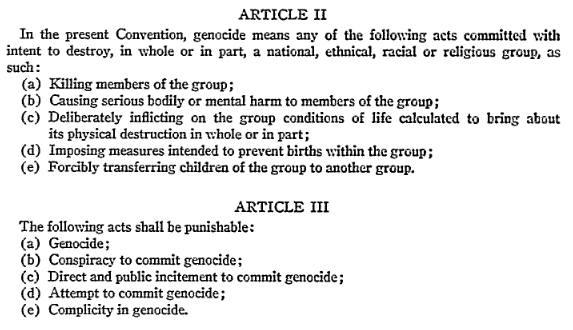
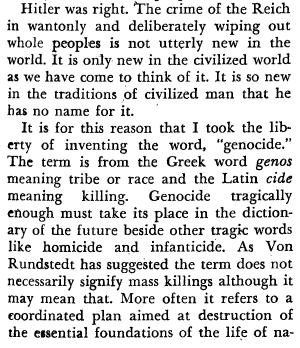
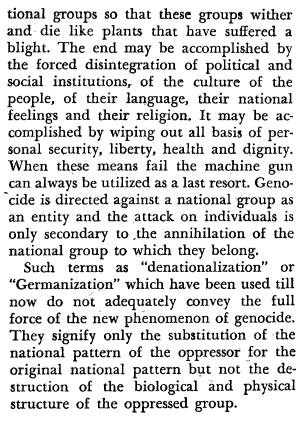
First a few general words concerning the term ‘genocide’: From the beginning ‘genocide’ has been envisaged to be a legal term, denoting actions for whose prevention there shall be a liability of States under international law (realised through the Genocide Convention) and which shall be persecuted on an individual basis under international penal law (realised through the Rome Statute of the International Criminal Court). However, starting with Lemkin the term has always been embedded into a certain theory of how modern mass violence emerges and how the refusal of self-determination and dignity of ethnic groups can turn into policies of either relatively slow annihilation or outright mass murder. The term ‘genocide’ has shaped our views of how we understand the crimes committed by various regimes during various wars and it has become a political tool: Its inflatory use has been driven by its proneness to serve the causes of national struggles (while allegations of war crimes against the enemy have always been used to fostern national unity, the term ‘genocide’ directly addresses the national unity as the victim of the crime), but also by its perceived particular capability of appealing to universal justice, of not allowing anybody in the world to remain uninvolved (which includes the calls to international courts and third countries to exercise universal jurisdiction against those responsible for genocide and even sometimes the idea that a genocide taking place would constitute an obligation for a humanitarian military intervention by third countries). Subsequently especially since the 90s and the court ruling on the massacre of Srebrenica constituting an act of genocide competition for recognition of genocides spread internationally. One should always keep in mind that there is a difference between using the term ‘genocide’ to explain some historic development or events or State policies and using the term ‘genocide’ or more precisely ‘act of genocide’ to denote an individual responsibility of some actors constituting a punishable crime.
For the sake of determinateness we will focus on the legal definition of genocide, the relevant passages read that we have to check whether we are dealing with an act “committed with
intent to destroy in part a national or ethnic group” by “killing members of the group” or by “deliberately inflicting on the group conditions of life calculated to bring about its physical destruction in part”.
Now concerning Israel—let us check the strongest arguments for Israeli acts of genocide as they are expounded by some legal and genocide scholars (not the usual allegations where every case of carelessly inflicted collateral damage is called “genocide”). Then we notice that two things are true:
1) High-profile Israeli politicians including members of the government, some high-ranking officers, some Israeli media, cultural figures like pop singers, and parts of the general population including in social media use genocidal rhetorics or express genocidal wishes, i.e. demands for the partial or entire annihilation of Palestinians in Gaza. Most often these rhetorics are based on deliberately blurring the lines between combattants and non-combattants (beyond the objective difficulties of discrimination) combined with totalising figures of speech.
2) Israel is causing non-combattant deaths in Gaza at an extraordinary scale and pace. The massive bombing campaign—regardless of which aspects of it are legal or not—displays a greater neglect for civilian survival than during previous Israeli wars and asymmetrical wars around the world in recent decades (maybe comparable to Russian bombings of Grozny (1999/2000) and Mariupol (2022) or to the indiscriminate shelling of Tamil Tigers combattants and civilians by the Sri Lankan army in Mullaitivu in 2009). Furthermore there are instances where Israeli government and members of the IDF commit undoubtedly illegal acts resulting in the killing of civilians (like shooting unarmed people with a white flag) or the deprivation of the Gazan population of its condition of life (i.e. using depravation of water as a mean of coercion).
Now people argue: Both the subjective elements of the crime (intent) and the objective elements of the crime (killing or destruction of conditions of life) are present. However, this argument is weak due to the lack of evidence that the genocidal rhetorics and demands (1) are actually part of the determining underlying motivations for the acts (2). To the contrary, there is clear evidence that the acts (2) have to be explained differently: The deprivation of water has been justified as a mean of coercion for the liberation of hostages (which constitutes an (ineffective) reprisal gravely breaching humanitarian international law and therefore a war crime, but the motivation was not genocidal). The intensity of the bombing is partly to be explained by military necessities—Hamas underground fortifications and the general troubles of urban warfare—and partly by factors like the urge to proceed as quickly as possible with very limited intelligence, to possibly disproportionately spare lifes of IDF soldiers which would be risked while fighting in houses and to intimidate the civilian population of Gaza. Furthermore there is certainly no general policy of indiscriminately shooting everyone moving.
While the arguments for genocide are weak, this does not imply that everyone making this accusation would apply double-standards against Israel. Rather the accusations can also be explained as the results of good-faith attempts to apply a certain wide-spread teleological approach of genocide research which considers genocide as the archetype of the ultimate crime, which is gradually approached by a spiral of rhetorics and deeds, amplifying each other, following a certain regular pattern described by genocide theories. Therefore for example the Center for Constitutional Rights in its October analysis was also careful to make no determinate allegation of genocide, but to leave the option open that we would be dealing only with an unfolding “attempt of genocide” (wish is already punishable under international law).
For a political analysis the not sufficiently founded allegation of genocide is not helpful. Of course certain extreme-right politicians with their openly genocidal rhetorics are a factor for understanding Netanyahu. And of course a society where certain rhetorics (for example of blurring the lines between combattants and non-combattants) have been normalised to a degree unseen in the years before October 7th will also have an impact on the decisions of certain military commanders. However, I fear that for saving lifes of Gazan civilians it would be far more important to counter for example the ruthless calls from the right to bomb every house before entering it to spare lifes of IDF soldiers and to talk about targetting practices and the humanitarian situation than to get fixated on certain rhetorics. Concerning persecution of individuals under international penal law by universal jurisdiction it is illusory that one would be able to prove the individual guilt of some commanders, since even if they expound genocidal opinions it will always be doubtful that they would have been decisive, while persecuting war crimes like the use of deprivation of water as a mean of coercion—or potentially even crimes against humanity—would be an option. Concerning State liability under the genocide convention there is of course a lesser burden of proof, for example if liabilities of genocide prevention are not met even if the government itself is not committing genocide, still without an actual case of genocide it seems to be far fetched that legal actions like those by South Africa against Israel in the International Court of Justice or by the CCR against the US administration in US courts may lead to any success and are a meaningful contribution to the political process towards alleviation of civilian suffering and ultimately peace.
Now concerning Hamas/PIJ: The overall agenda of Hamas and Palestinian Islamic Jihad can certainly justly be described as genocidal: They reject the right of Jews to live in the region and to self-determination. And since decades they made clear by their terrorist attacks that they consider virtually any Jewish Israeli a legitimate target by calling them “Zionist settlers”. Likewise in the unlikely case of a collapse of the Israeli State every Jewish civilian not being able to flee would have to fear for their life under the threat of Hamas and PIJ. These ultimately genocidal intentions also have some level of support in parts of the Palestinian population, manifested for example by the not that rare adoration of Hitler for his genocide against the Jews. However, do the attacks from October 7th constitute an act of genocide? First we should recognise the other motivations involved: Hamas continued its agenda of sabotaging the cooperation between the Palestinian Authority and Israel, the normalisation between Israel and Saudi Arabia and any potential future renewed peace process between Palestinians and Israel. This allowed Hamas also to progress towards hegemony in more regions of the West Bank. Furthermore, according to Khaled Mashal, it tried to force Israel to engage in a perpetuated state of war with the hope of other forces like Hezbollah joining till the conflict would escalate into a regional war in which Israel’s existence would be seriously at risk. The war criminal mass murder of civilians—most likely a crime against humanity—has been instrumental for definitely effectuating this level of escalation. Furthermore the murder of some 800 civilians on October 7th conveys the message that no Jewish Israeli shall have the right to be let alone living in peace in their home. This has strong parallels to the massacres against civilians during previous wars defined by ethnic conflicts, for example consider the Oran massacre against civilians of European descent perpetrated by the Algerian National Liberation Army in 1962 aiming at the expulsion of Europeans and pied-noirs from Algeria the pogroms against the Jews of Cairo in 1945 and 1948 accompanied by the exclusion of Jews from Egyptian citizenship and ultimately leading to the forced exodus of all Jews from Egypt, or the Deir Yasin massacre perpetrated by Irgun and Lechi during the Nakba as part of efforts to expell/reduce the Arab population, or think of massacres along ethnic lines not only committed by Serbs, but also Croats and Kosovans during the Yugoslavian wars and persecuted as crimes against humanity, not as acts of genocide. One should also note that the killings by Hamas and PIJ members were not everywhere equally systematic, for example they do not reach the degree of organisation and systematicity of the German Einsatzgruppen in their execution of the genocide, also I do not see efforts of separation of victims along ethnic lines, which would make the genocidal intention clearer (such separation was crucial for the ruling on the Srebrenica massacre). The written instructions for the Hamas attack published by the Israeli authorities only contain an ambiguous allusion to the indiscriminate murder of civilians, some reports published by the Israeli authorities also indicate that Hamas terrorists sometimes had no clear vision what to do and stopped after killing some civilians. Of course also the conflicting goals of taking hostages, returning to Gaza and damaging and pillaging Israeli military facilities put some limits on the massacre, and only a part of the Hamas forces was engaged with the murder of civilians. Overall the massacre is also smaller than all the pogroms carried out by the Ukrainian nationalists under Petljura and the White Army of Denikin during the Russian civil war—and these pogroms are seldom called genocide. However, the legal understanding of genocide has evolved, the murder of 8,000 male Bosniaks and Srebrenica, involving a process of separation by identify the Bosniaks, has been determined to be an act of genocide—even if it has been limited in scope to a single Serbian military operation, the siege of Srebrenica, while no other military actions nor the overall policies of the Serbian leadership have been identified as acts of genocide. Given the genocidal intentions of Hamas and the size of the massacres, still somebody may try to make the case in court for the massacre at the Nova festival or for example the massacre in the Kibbutz Be’eri to be acts of genocide rather than simply crimes against humanity and the court might rule this way or that way—however, with a few hundred victims these would be the smallest acts of genocide ever asserted by a court.
In my opinion the allegations of genocide rather illustrate the shortcomings of certain paradigms of genocide research and of genocide recognition politics, which have been criticised already before. The fixation on the genocide paradigm does more damage then good. Given the development of international law one has to understand that an act of genocide in the legal sense is not necessarily worse than some other crime against humanity. Instead of helping to understand the unfolding of mass violence it rather forecludes the understanding and reimposes nationalist reductionist views of conflicts (be it in the current war betwen Israel and Hamas/PIJ, between Turkey and leftist Kurdish and Yazidi movements for self-determination, between Russia and Ukraine or in the Soviet Union during the 1932 famine…).
Finally one remark concerning freedom of speech: Given the intricacies of these kinds of discussion it should be clear that it will never be a good idea to try to resolve these questions of interpretation of events by means of censorship, disciplinary actions in universities or criminal persecution of voicing certain opinions about these issues.
Leave a Reply